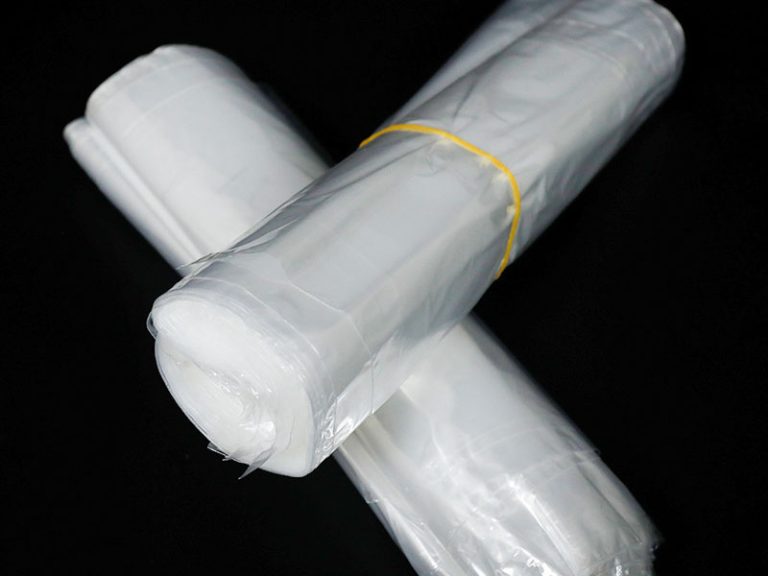





Why Chicago Packaging Teams Choose Cross-Linked POF Over Standard Film
Ever wonder why your shrink wrap keeps f...
Product Description
Ever wonder why your shrink wrap keeps failing at the loading dock?
Chicago packaging teams—especially those handling food, beverages, and retail goods—face a daily balancing act: speed, safety, and shelf appeal. In a city where distribution hubs like the Union Stockyards Logistics Park and the O’Hare freight corridor push throughput to the limit, choosing the right shrink film isn’t just about cost—it’s about consistency under pressure. That’s why more local converters, co-packers, and fulfillment centers in Chicago packaging services are quietly switching from standard polyolefin (POF) to cross-linked POF. It’s not flashy marketing talk; it’s what happens when real-world demands meet material science.
Standard POF works—until it doesn’t
Let’s be fair: standard POF has earned its place in Chicago packaging services for good reason. It’s FDA-compliant, clear, affordable, and shrinks cleanly at moderate temperatures. But here’s the catch—its molecular structure is linear. When heat hits it during high-speed packaging runs on machines like Lantech or Signode wrappers, that linearity becomes a liability. You get inconsistent shrink force, especially around corners or on irregular loads. In Chicago’s humid summers or dry winters, standard POF can become brittle or overly tacky—leading to web breaks, mis-shrunk bundles, and wasted labor re-running lines. One regional beverage distributor told me last month, “We were averaging three film jams per shift—and each one cost us 12 minutes. Not to mention the product damage when pallets shifted mid-transit.” That’s not efficiency. That’s friction disguised as routine.
Cross-linking changes the game—literally
Cross-linked POF undergoes electron-beam irradiation *before* extrusion, creating covalent bonds between polymer chains. Think of it like weaving a net instead of laying down parallel strings. The result? A film that retains memory, resists stress whitening, and delivers up to 40% higher tensile strength at the same gauge. More importantly for Chicago packaging services, it shrinks faster and more uniformly—even at lower temperatures. That means less dwell time on the sealer bar, fewer thermal variations across multi-item SKUs, and tighter, glossier bundles that survive the bumpy ride down I-90. And yes, it still meets FDA requirements for direct food contact. I’ve watched it handle chilled protein trays, hot-filled sauce bottles, and stacked e-commerce kits—all without curling, cracking, or clouding. It’s not magic. It’s chemistry calibrated for Midwest logistics.
A real Chicago case: From frustration to reliability
Take a midsize frozen meal co-packer on the South Side. They’d been using standard POF for years—until their new Walmart DC mandate required zero visible gaps on bundled trays. Their old film couldn’t hold tension across temperature swings inside refrigerated trailers, and shrink inconsistency meant rejected loads. After testing three alternatives, they landed on 19-micron cross-linked POF. Within two weeks, their line uptime jumped from 82% to 96%, and their shrink-related customer complaints dropped to zero. No machine retrofits. No staff retraining. Just better physics meeting local operational reality. Another example? A family-owned confectionery brand in Naperville switched for aesthetic reasons—their glossy, distortion-free finish now stands out on Kroger shelves. Turns out, performance *and* presentation aren’t mutually exclusive.

It’s not about upgrading for the sake of it
Look—cross-linked POF costs more per roll than standard film. There’s no sugarcoating that. But if you’re running 12-hour shifts in a Chicago packaging service, every minute saved on downtime, every pallet secured without secondary strapping, every return avoided because the bundle held up on the truck… that math adds up fast. What feels like a premium upfront starts looking like insurance—and then like ROI—once you factor in labor, waste, and reputation. Plus, many local suppliers like Chicago Shrink Solutions and Midwest Film Partners now stock cross-linked POF in common gauges and widths, with same-day delivery across Cook and DuPage counties. You don’t need to overhaul your supply chain to try it. You just need to ask the right question next time your film snaps at 3 a.m. on a Friday night.
So—what’s holding you back?
If your shrink wrap is still playing catch-up with your production pace—or if you’ve ever stared at a warped, cloudy bundle wondering why it didn’t look like the sample—you’re not alone. Chicago packaging services have spent years optimizing everything *except* the film itself. Maybe it’s time to treat shrink not as an afterthought, but as part of the system design. Curious how cross-linked POF would perform on your specific line, load profile, or seasonal demand spike? Reach out to a local film specialist who’s actually wrapped Chicago-style pallets—not just recited datasheets. Sometimes the best upgrade isn’t louder, faster, or flashier. It’s quieter, tighter, and just… more reliable.
Technical Specifications
| Property | Value |
|---|---|
| Material | Polyolefin (POF) |
| Type | Cross-linked |
| Thickness | 12-50μm |
| Width | 200-1500mm |
| Length per roll | 500-2000m |
| Shrink temperature | 100-140°C |
| Shrink rate (MD/TD) | 50%/50% |
| Tensile strength | ≥25MPa |
| Elongation at break | ≥500% |
| Optical clarity | ≥92% |
| Food grade | FDA/BRC certified |