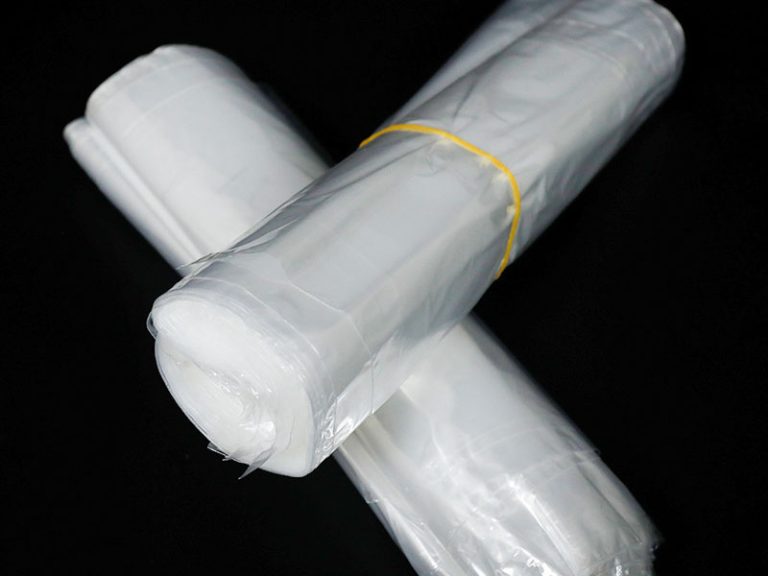




Why Packaging Engineers Keep Choosing POF Cross-Linked Film
That moment when your shrink wrap fails ...
Product Description
That moment when your shrink wrap fails mid-production
You’re running a high-speed packaging line—bottles flying, labels aligning, heat tunnels humming—and then it happens. A batch of trays starts slipping. Seals weaken under ambient humidity. Shrink tension drops just enough to leave gaps around corners. You pause the line, adjust the temperature, re-tension the film… only to see the same issue creep back by lunchtime. Frustrating? Absolutely. Costly? Even more so. And no, it’s not always operator error—or even machine calibration.
The hidden weakness in standard shrink films
Most folks assume shrink film is shrink film—that once you’ve picked a gauge and a grade, performance is mostly predictable. But here’s what rarely makes it into spec sheets: conventional polyolefin (POF) films rely heavily on crystallinity for strength and shrink force. And crystallinity has limits. When ambient temperatures swing, or when products carry residual heat or moisture, that delicate crystal structure softens. The result? Reduced shrink onset, inconsistent tightness, and sometimes, outright seal failure at critical joints. It’s not that the film is “bad”—it’s that it wasn’t built for dynamic real-world conditions. That’s where cross-linking changes everything—not as a buzzword, but as a molecular upgrade.
What actually happens when POF gets cross-linked?
Cross-linking isn’t magic—it’s chemistry applied with intention. In standard POF, polymer chains slide past each other when heated, delivering shrink but also allowing creep over time. Cross-linking introduces covalent bonds between those chains, like tiny bridges locking segments in place. So when heat hits, the film still shrinks vigorously—but now it holds its shape longer, resists stress relaxation, and maintains seal integrity even during transit or storage fluctuations. Think of it like switching from elastic bands to reinforced bungee cords: same stretch, way more memory. And yes, it still runs smoothly on standard shrink tunnels—no retrofitting needed. That’s why food processors handling chilled ready-meals, medical device packagers sealing sterile trays, and e-commerce fulfillment centers shipping irregular bundles all report fewer rejects and tighter downstream tolerances after making the switch.
Where does this film truly shine—and where does it surprise people?
Most engineers first consider cross-linked POF for demanding applications: multi-pack beverage carriers, heavy-duty tray wraps, or anything needing puncture resistance alongside high gloss. But what catches people off guard is how well it handles subtler challenges—like wrapping cold, condensation-prone items straight from refrigeration. Standard POF can fog, cling unevenly, or even “cold-flow” (deform slowly under its own tension) when chilled. Cross-linked POF doesn’t. Its networked structure stays stable across a wider thermal window—so shrink onset stays sharp, and appearance stays crisp. I’ve seen teams switch just to solve labeling misalignment caused by film slack on hot-fill PET bottles—and end up cutting their annual film waste by 18%. Not because the film is thicker, but because it behaves more predictably, run after run.
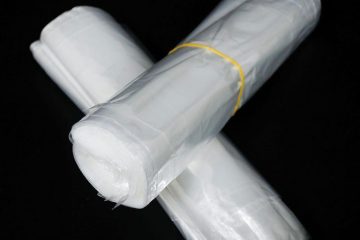
Still wondering what POF cross-linked film is used for?
It’s not just about “shrinking tighter.” It’s about shrinking *smarter*: consistent tension where it matters, resilience where conditions vary, and reliability where downtime costs thousands per hour. Whether you’re sealing fragile electronics, bundling fresh produce, or protecting premium cosmetics during global shipping, this film answers questions you didn’t know you had—like why your current setup works *most* of the time, but never quite *all* of the time. If you’ve ever tweaked settings just to chase yesterday’s results, or blamed the machine for what was really a material limitation, it might be worth asking: what if the film itself could absorb some of that variability? We’ve helped dozens of packaging teams run side-by-side trials—no sales pitch, just real data from *their* line, *their* SKUs, *their* seasonal shifts. Curious how cross-linked POF would behave in your environment? Let’s set up a low-pressure test—no commitment, just clarity.
Technical Specifications
| Property | Value |
|---|---|
| Material | Polyolefin (POF) |
| Type | Cross-linked |
| Thickness | 12-50μm |
| Width | 200-1500mm |
| Length per roll | 500-2000m |
| Shrink temperature | 100-140°C |
| Shrink rate (MD/TD) | 50%/50% |
| Tensile strength | ≥25MPa |
| Elongation at break | ≥500% |
| Optical clarity | ≥92% |
| Food grade | FDA/BRC certified |