




Choosing the Right POF Cross-Linked Film for High-Speed Lines
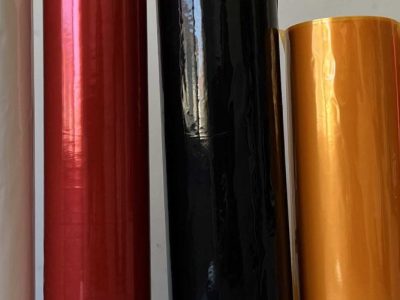
It started with a jam—and a very expensive downtime
Two years ago, my team ran into a nightmare on our new 450-bag/min shrink-wrapping line. We’d just switched to a “premium” POF cross-linked film—bought on spec, not on test—and within three shifts, we were averaging 12 unplanned stoppages per shift. Bags slipped off the feed conveyor, seals failed mid-run, and the shrink tunnel kept throwing inconsistent shrink ratios. I remember standing in front of that line at 3 a.m., coffee cold in hand, watching a stack of rejected bundles pile up beside the reject chute. That’s when I realized: choosing POF cross-linked film isn’t about specs on a datasheet—it’s about how it behaves *in your machine*, under *your conditions*, with *your product*. Not all cross-linked POF films are built for speed, even if they say “high-speed” on the label.
What saved us wasn’t switching brands blindly—it was stepping back and treating film selection like process engineering. We mapped every variable: seal bar temperature consistency, dwell time, film tension across the unwind, ambient humidity in the packaging room (which spiked during monsoon season), and even the surface texture of our plastic trays. Turns out, our old film had a slightly higher coefficient of friction—just enough to keep bags aligned through the infeed, while the new one was *too* slick. We didn’t need “faster” film. We needed *more forgiving* film—one that could absorb small fluctuations without cascading into failure. That lesson reshaped how I approach every new line upgrade or film trial now.
Don’t trust the shrink ratio number alone
I’ll be honest—I used to obsess over shrink ratios. “75% longitudinal? Great!” I’d think. Then I’d run it—and watch bottles buckle or labels wrinkle because the film shrank *too fast*, too early in the tunnel. Cross-linked POF shrinks differently than standard POF: it’s more aggressive, more uniform, but also less tolerant of uneven heat distribution. On one client’s line in Ohio, their tunnel had hot spots near the entry zone from an aging IR emitter array. Their previous film (non-cross-linked) would stretch and relax just enough to compensate. The cross-linked version? It seized up at 92C and pulled sideways—twisting entire packs before they even hit the center zone. We swapped in a film with a 3–5C higher onset shrink temperature, and suddenly everything stabilized. That wasn’t in the brochure. That came from running thermal profile scans with a handheld IR gun while feeding dummy loads.
Here’s what I check now before approving any cross-linked POF for high-speed use: actual onset shrink temp (not just peak), shrink force curve (measured with a tensile tester—not guessed), and—most critically—shrink *rate* at 105C. If it hits >80% shrink in under 1.8 seconds at that temp, it’s likely too reactive for anything above 300 bpm unless your tunnel has micro-zoned control. One supplier in Taiwan sent us a sample labeled “optimized for 500 bpm.” In our lab, it achieved full shrink in 1.3 seconds at 105C—and shredded six consecutive runs on our fastest line. We asked for the raw DSC data. Turns out, their “optimization” meant reducing cross-link density to boost speed—but sacrificed seal integrity at 160C. Real-world trade-offs, not marketing claims.
Your sealer matters more than your film’s tensile strength
Let me tell you about a quiet disaster in Georgia last fall. A co-packer brought in a new high-frequency impulse sealer—state-of-the-art, fully digital, with closed-loop temperature feedback. They assumed any cross-linked POF would “just work.” First day: 40% seal failures on irregularly shaped snack trays. Why? Because their sealer’s dwell time was fixed at 0.85 seconds, calibrated for standard POF. Cross-linked film needs *less* heat—but *more precise timing*. Its polymer network responds faster to thermal energy, so overshooting by even 0.15 seconds degrades the seal layer instead of strengthening it. We dropped dwell to 0.62 seconds, added a 5C reduction in bar temp, and introduced a slight pre-tension step before sealing. Seal yield jumped to 99.8%. No film change. Just smarter sealer tuning.
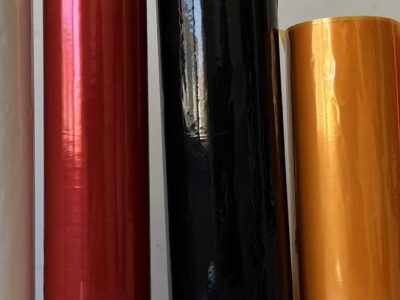
I’ve seen teams spend $15k on film trials while ignoring the fact their sealer jaws haven’t been recalibrated in 18 months. Worn thermistors, oxidized heating elements, inconsistent pressure rollers—all of those quietly sabotage even the best cross-linked POF. My rule now? Before testing any new film, I verify sealer performance first: run a thermal mapping grid across the bar surface, measure actual dwell time with a high-speed camera (yes, really), and confirm jaw alignment with feeler gauges. If the tool isn’t dialed in, no film will save you. And honestly? Most cross-linked POF films perform nearly identically *if your sealer is stable*. The real differentiator is how well your equipment talks to the film—not how glossy the datasheet looks.
So—what do I tell newcomers? Stop chasing “the fastest film.” Start chasing *compatibility*. Run your first trial at 70% of max line speed—not full throttle. Watch where tension spikes. Note where wrinkles form *before* the tunnel. Log seal temperatures every 30 minutes, not just at startup. And never, ever skip the 72-hour production validation—even if the first 200 meters look perfect. Humidity shifts, operator fatigue, minor belt wear… those variables expose weaknesses no lab test can predict. I still keep a binder of failed film samples—not as trophies, but as reminders: speed isn’t a property of the film. It’s the outcome of alignment between material science, machine behavior, and human judgment. Choose wisely, test relentlessly, and respect the physics hiding inside every micron of that shiny roll.


Comments (0)