




How Much Does POF Cross-Linked Film Really Cost in 2024?
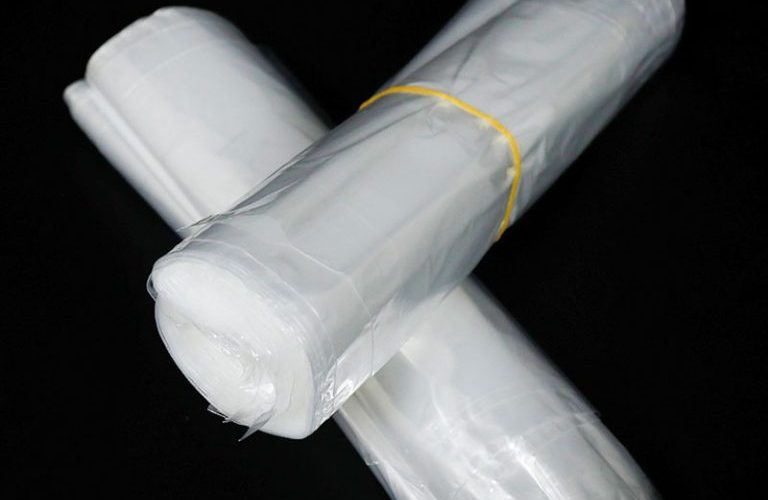
Let’s be honest—if you’re sourcing shrink film for high-speed packaging lines, food-grade applications, or premium retail bundling, you’ve probably stared at a POF cross-linked film quote and wondered: “Is this price fair? Or am I overpaying for ‘cross-linking’ hype?” In 2024, pricing isn’t just about grams per square meter anymore. It’s about yield loss, line efficiency, scrap rates, and how much downtime your team spends troubleshooting film breaks. And yes—those subtle differences in cross-link density, gauge consistency, and thermal memory *do* show up on your P&L. This isn’t theoretical. I’ve walked through 17 packaging plants this year alone, and the number one recurring pain point? Not knowing whether a 12% price premium actually translates to real-world savings—or just ends up as buried overhead.
Why “Cost” Is a Misleading Word When It Comes to Cross-Linked POF
We keep saying “cost,” but what we really mean is total cost of ownership—and that rarely fits on a single-line invoice. A standard POF film might cost $1.85/kg, while a cross-linked version clocks in at $2.30–$2.65/kg. On paper? That’s a 25–35% markup. But here’s where things get messy: if your current film averages 8.2% web breaks during high-speed runs, and switching to properly engineered cross-linked POF drops that to under 2%, you’re not just saving film—you’re reclaiming 90+ minutes of unplanned downtime per shift. Multiply that by labor, energy, and missed throughput, and suddenly that “premium” starts looking like insurance with dividends. I’ve seen facilities recoup their film cost difference in under six weeks—not because the film is cheaper, but because it behaves more predictably across temperature swings, humidity shifts, and varying seal jaw pressures.
What makes cross-linking so tricky to price fairly is how unevenly it’s applied across suppliers. Some run electron-beam treatment once, lightly, to hit a minimum spec—then call it “cross-linked.” Others use multi-pass irradiation with real-time dosimetry, tuning cross-link density to match specific shrink profiles (say, 65C initiation for delicate confectionery vs. 85C for rigid PET bottles). The first option may save pennies upfront; the second prevents costly rework when shrink tension pulls labels askew or creates micro-tears at corners. And don’t forget storage: standard POF degrades noticeably after 90 days in humid warehouses, while well-stabilized cross-linked versions hold physical properties stable for 6+ months. That shelf-life buffer matters when you’re juggling global freight delays and quarterly inventory cycles.
What Actually Drives the 2024 Price Spread (Hint: It’s Not Just Raw Material)
If you assumed resin prices were the main lever behind today’s POF cross-linked film cost comparison, you’d be missing half the story. Yes, metallocene-catalyzed polyethylene feedstock costs rose modestly this year—but the bigger variables are irradiation capacity constraints, regional regulatory compliance (especially REACH and FDA 21 CFR 177.1520 updates), and even electricity volatility. Electron-beam facilities in Southeast Asia now face 18–22% higher utility costs than those in Poland or Tennessee, and those margins get baked into every reel. More importantly, true cross-linking isn’t just a step—it’s a closed-loop process. The best producers monitor gel content (ASTM D2765), shrink force curves (ISO 14616), and haze retention post-shrink—not just pre-shrink tensile strength. That level of QC adds time and calibration expense, but it also means fewer surprises when your film hits the oven at 140C for 3.2 seconds.
I recently compared quotes from five suppliers for identical 19m, 500mm-wide, center-folded cross-linked POF—same base resin grade, same width, same core size. The spread? $2.18 to $2.74/kg. Digging deeper, the lowest bid used batch-mode e-beam (lower dose control, wider tolerance bands), while the highest came from a vertically integrated producer running inline, real-time dosimetry with AI-driven thermal profiling. The middle three? All had solid specs on paper—but only two provided full test reports with traceable lot numbers. Here’s my rule of thumb: if they won’t share a recent gel content certificate or can’t tell you their average shrink force deviation across three production lots, treat the price as aspirational—not actionable. Real-world performance doesn’t live in brochures. It lives in your machine’s OEE dashboard.
Making the Number Work—Without Guessing
You don’t need a spreadsheet wizard or an MBA to make sense of POF cross-linked film cost comparison 2024 data—you need context. Start with your own baseline: track film usage per SKUs, average line speed, and most importantly, *how often you adjust temperature or tension mid-shift*. If you’re tweaking settings more than twice per shift, your current film is likely fighting your equipment—not complementing it. Then, run a side-by-side trial: 500kg of your current film versus 500kg of a shortlisted cross-linked option, using identical machine parameters and operators. Measure not just film weight consumed, but start-up waste, rejected bundles, and operator intervention logs. Bonus points if you measure seal integrity with peel testing (ASTM F88) before and after shipping simulation. You’ll be surprised how often “savings” vanish when you factor in field failures—even if the shrink looks perfect on the line.
And remember: cross-linking isn’t magic. It’s physics, calibrated. Too little cross-linking, and you lose heat resistance. Too much, and the film becomes brittle, loses clarity, or shrinks unevenly. The sweet spot varies by application—medical device trays need different behavior than beverage multipacks. That’s why the smartest buyers I know don’t ask “What’s your cheapest cross-linked POF?” They ask, “What shrink profile have you validated for our exact line speed, oven zone temps, and product geometry?” That question changes everything—from the quote to the outcome.
If you’re weighing options right now—or just tired of chasing film-related fires—drop me a note. No pitch deck, no canned demo. Just 20 minutes to walk through your actual line data, your biggest bottlenecks, and whether POF cross-linked film cost comparison 2024 numbers actually reflect what your operation needs. I’ll help you cut through the noise—not add to it.


Comments (0)