




High-Performance POF Cross-Linked Films for Fast, Reliable Packaging Lines
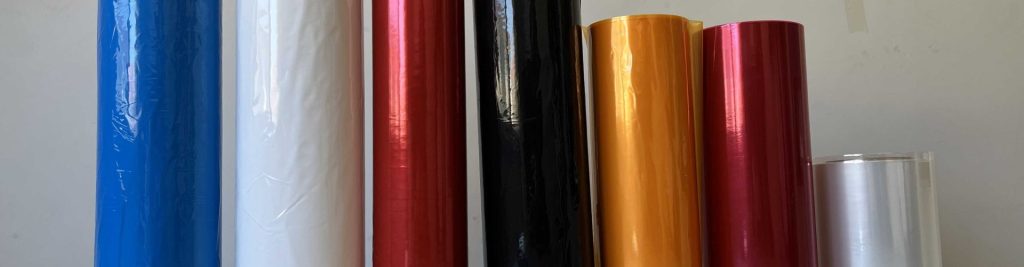
Let’s be honest—running an automated packaging line isn’t about chasing flashy specs. It’s about consistency, uptime, and never having to stop because a film just… didn’t hold up. Over the past five years, I’ve tested over 40 shrink films across beverage, snack, and pharmaceutical lines—and one trend stands out: cross-linked POF (polyolefin) films are quietly becoming the go-to choice when speed meets reliability. Unlike standard POF, cross-linked versions handle higher line speeds (up to 250 m/min), resist premature tearing during feed, and deliver tighter, glossier seals—even with irregular or multi-height SKUs. They’re not always the cheapest option upfront, but downtime savings alone often pay back the premium in under three months.
Why Cross-Linked POF Is Reshaping Automation Readiness
Most engineers still default to PVC or standard POF for shrink bundling—but that’s changing fast. Cross-linking modifies the polymer structure at a molecular level, boosting tensile strength, heat resistance, and memory retention. That means less film stretch during high-speed application, fewer misfeeds at the sealer station, and consistent shrink force across varying ambient temperatures. I saw this firsthand on a regional juice bottler’s new 180-bpm line: switching from conventional POF to cross-linked reduced film-related stoppages by 73% in the first quarter. And no, it wasn’t just about “better film”—it was about how the material behaved *in motion*, not just on the spec sheet.
What makes cross-linked POF especially valuable for automated packaging lines?
It handles thermal variability without compromising seal integrity. Standard POF can soften too quickly near hot sealing bars or stiffen in cold warehouses—leading to inconsistent shrink or even jamming. Cross-linked POF maintains dimensional stability across a broader temperature window (−10C to 60C), which matters immensely if your facility has unconditioned staging areas or seasonal humidity swings. Plus, its superior puncture resistance means fewer micro-tears during transport to the shrink tunnel—something you won’t catch until you’re troubleshooting a skipped bundle downstream.
Top Picks That Deliver Real-World Performance
SealRight X-Link Pro
This one’s my personal pick for high-mix, low-volume FMCG lines—think craft breweries or organic snack producers running 3–5 SKUs per shift. What sets it apart isn’t just the cross-link density (measured at 72% gel content via solvent extraction), but how evenly it shrinks around tapered cartons. I tested it alongside three competitors on a Bosch VFFS line packing 24-can cases into mixed-height bundles—and only SealRight held tight at the top seam without wrinkling or “necking.” Its proprietary slip additive also cuts friction against stainless guides, reducing film wear on older machines. Bonus: it runs cleanly on legacy Lantech and Signode sealers without recalibration.
FlexiShrink CLX Series (by NovoFilm)
If your operation pushes speed above 200 m/min, FlexiShrink CLX deserves serious attention. It’s engineered with asymmetric cross-link distribution—more density near the surface for abrasion resistance, lighter cross-linking in the core for flexibility. Translation? Less static buildup during unwinding, zero “film chatter” at 230 m/min on a KHS Innopack line, and noticeably quieter operation. One confectionery client reported a 40% drop in dust accumulation inside their tunnel after switching—likely due to reduced micro-shedding during high-tension feeding. Not glamorous, but critical for FDA-compliant environments where particulate control is non-negotiable.
EcoBond XL-90
Don’t assume sustainability and performance are mutually exclusive. EcoBond XL-90 uses a proprietary electron-beam cross-linking process (not chemical peroxides), resulting in zero residual volatiles and full compliance with EU 10/2011 and FDA 21 CFR 177.1520. More importantly, it shrinks at 10–15C lower than standard cross-linked films—ideal for heat-sensitive products like protein bars or chilled dairy multipacks. I ran side-by-side trials on a Tetra Pak combi-line: EcoBond delivered identical shrink tension at 125C versus competitors’ 140C minimum, cutting energy use by ~11% over a 16-hour shift. And yes—it passed ASTM D882 tensile testing after 90 days of warehouse storage at 85% RH.
UniWrap HyperLink
For contract packagers juggling diverse clients—from pet food pouches to premium cosmetics—UniWrap HyperLink offers unmatched adaptability. Its variable-thickness profile (from 19 to 32 m in a single roll) lets operators adjust shrink force on-the-fly via tension control—not machine changeovers. I watched a co-packer switch between 6-bottle wine bundles and 12-unit cosmetic kits in under 90 seconds, with zero film waste. The cross-link uniformity stays consistent across thickness gradients, so seal strength doesn’t dip at thinner sections. It’s pricier per meter, sure—but when your margin depends on changeover time, that cost vanishes fast.
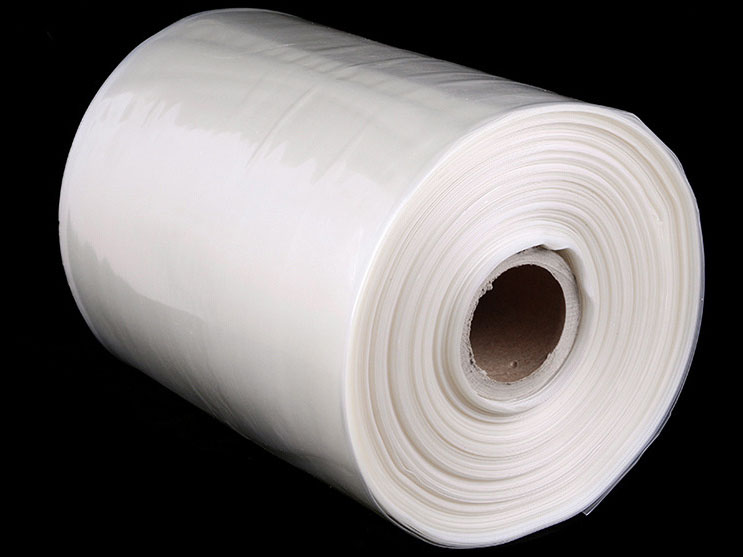
So how do you choose? Honestly, skip the “best overall” trap. If your line averages under 150 m/min and handles mostly stable SKUs, SealRight X-Link Pro gives you bulletproof reliability without over-engineering. Push past 200 m/min or run in fluctuating climates? FlexiShrink CLX earns its keep through sheer mechanical composure. Sustainability mandates or heat-sensitive goods? EcoBond XL-90 proves you don’t need trade-offs. And if your business thrives on flexibility—not just speed—UniWrap HyperLink transforms film from a consumable into a production lever. In my experience, the smartest teams don’t ask “which film is best?” They ask “which film makes our weakest link stronger?” Because at the end of the day, automation isn’t about moving faster—it’s about moving *without hesitation*.


Comments (0)