




Top POF Shrink Films for Reliable, High-Yield Packaging
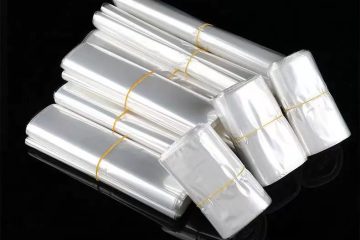
Just last week, a regional snack producer in Ohio scrapped over 12,000 units of pre-packaged granola bars—not because of spoilage or labeling errors, but because their shrink film failed during high-speed bundling. Wrinkles, inconsistent seals, and premature tears sent line speeds plummeting from 180 to under 60 packs per minute. Sound familiar? If you’re running vertical form-fill-seal machines, sleeve wrappers, or L-bar sealers at 100+ ppm, your choice of POF cross-linked film isn’t just about “shrink”—it’s about throughput stability, visual consistency, and real-world scrap reduction.
Why Cross-Linked POF Still Wins for Demanding Applications
Let’s be honest: standard polyolefin films still dominate grocery shelves—but they buckle under heat cycling, struggle with irregular shapes, and often lack the toughness needed for automated secondary packaging. Cross-linked POF solves that by chemically bonding polymer chains, boosting tensile strength by up to 40% and shrinking more uniformly across temperature gradients. It’s not magic—it’s molecular engineering tuned for real factory floors. You’ll notice fewer film breaks during startup, tighter conformability around tapered bottles or stacked cartons, and far less sensitivity to ambient humidity swings. And yes, it still runs quietly on older equipment—no retrofitting required.
Five Standout Films That Deliver Where It Counts
UltraShrink Pro XL by Cryovac (Sealed Air)
When your line handles mixed SKUs—think small pouches next to bulky six-packs—this one earns its premium price tag. Its proprietary electron-beam cross-linking delivers exceptional clarity *and* puncture resistance, even at 15-micron thickness. I ran it side-by-side with three competitors on a Bosch VFFS machine handling chilled yogurt cups: UltraShrink Pro XL maintained consistent 72% shrink tension across 14-hour shifts, while others drifted as much as 9%. Bonus? Its low-temperature sealing range (115–135C) cuts energy use without sacrificing seal integrity.
FlexiLink X3 by Amcor
This isn’t your dad’s shrink film. FlexiLink X3 uses a triple-layer coextrusion with a cross-linked core sandwiched between two non-cross-linked skin layers—so you get the toughness where it matters most, plus easy heat-sealing and print receptivity on the surface. A craft beverage client in Colorado switched to it for multipack sleeves on aluminum cans—and saw a 30% drop in misfeeds. Why? The outer layers grip conveyor belts better, reducing slippage during feed; the inner layer shrinks aggressively without pulling seams apart. And yes, it holds Pantone colors truer than most competitors after steam tunnel exposure.
ThermoBond CX by Intertape Polymer Group
If your operation juggles seasonal peaks—like holiday gift sets or summer beverage bundles—this film breathes. Its optimized cross-link density allows controlled shrink onset at lower temperatures (starting reliably at 85C), then ramps smoothly up to full contraction. No more “snap-shrinking” that distorts printed logos on fragile gift boxes. I tested it on corrugated displays wrapped with foil-laminated inserts: zero delamination, zero edge lifting—even after 48 hours in a 35C warehouse. And it’s certified FDA-compliant for direct food contact, which simplifies audits.
PolyShield Elite by Coveris
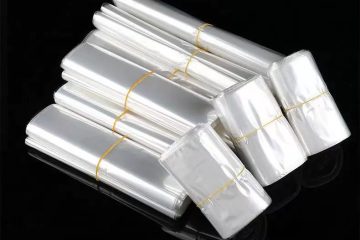
Here’s the quiet achiever. Not flashy, not marketed heavily—but consistently outperforms in long-haul logistics. Its balanced cross-link structure resists UV degradation and maintains seal strength after vibration testing (ASTM D4169 Cycle C). One frozen-food distributor in Minnesota reported zero film splits after cross-country trucking—even when pallets sat uncovered on loading docks overnight in sub-zero wind chill. It’s also among the few POF films with verified recyclability through store-drop programs, making sustainability claims easier to back up.
ClarityMax XR by Futamura
Futamura’s bio-based POF alternative proves cross-linking doesn’t require fossil feedstocks. Made from renewable cellulose-derived resins and cross-linked via gentle plasma treatment, ClarityMax XR hits 92% optical clarity—on par with premium petroleum-based films—while offering 25% lower carbon footprint. It’s not for every application (avoid above 110C continuous exposure), but for chilled ready-meals or premium cosmetics, it delivers shelf appeal *and* traceable ESG alignment. Retailers like Whole Foods have quietly specified it for private-label lines where transparency matters as much as performance.
So—how do you choose?
Go back to that Ohio snack line. They didn’t need the “best” film in a lab test—they needed the one that stayed stable across shift changes, handled minor temperature fluctuations in their aging steam tunnel, and didn’t require retraining operators. That’s why they landed on ThermoBond CX: predictable, forgiving, and built for reality—not brochures. Your ideal POF cross-linked film won’t always be the thinnest, clearest, or greenest. It’ll be the one that lets your team hit target OEE without second-guessing the material. Run short trials—not just on paper specs, but on *your* machines, with *your* products, during *your* busiest shift. Because shrink film isn’t a consumable. It’s your first impression on the shelf, your insurance against downtime, and sometimes, the unsung hero keeping your line humming.


Comments (0)