




Why Cross-Linked POF Film Is Gaining Trust in Pharma Packaging
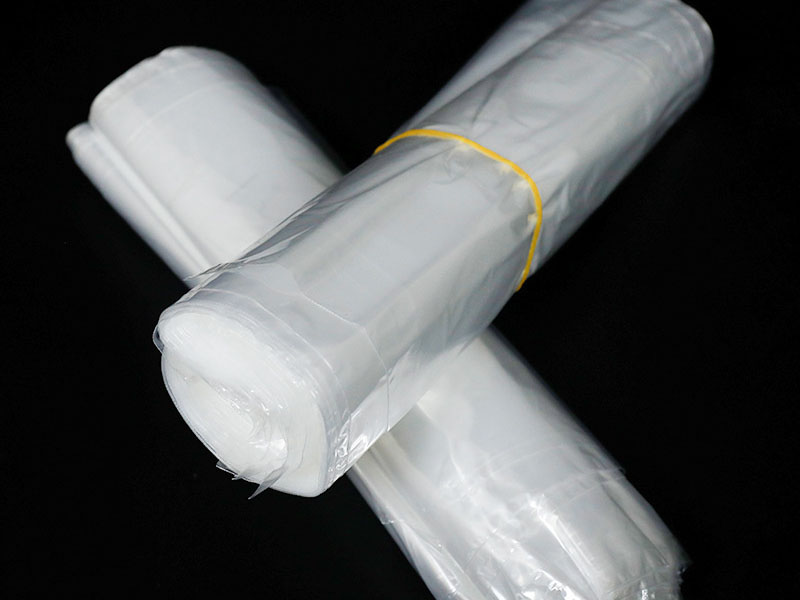
Over 68% of biologics launched since 2020 rely on secondary packaging that must withstand cold chain fluctuations, moisture ingress, and sterilization compatibility—yet many still default to standard polyolefin shrink films. That’s where things get interesting. Conventional POF (polyolefin) films offer clarity and seal integrity, sure—but when it comes to protecting temperature-sensitive vials, lyophilized powders, or pre-filled syringes, they often hit a wall: shrink tension drops above 45C, seal strength degrades after gamma irradiation, and moisture vapor transmission creeps up just when you need it lowest. Enter cross-linked POF film—not just a tweak, but a structural upgrade at the molecular level.
You might wonder why pharmaceutical packagers are quietly shifting toward cross-linked POF instead of sticking with trusted PETG or PVC alternatives. It boils down to balance: PETG gives rigidity but lacks toughness during high-speed shrink tunnel transit; PVC delivers tight seals but raises regulatory eyebrows due to chlorine content and extractables concerns. Cross-linked POF? It bridges that gap. The electron-beam or peroxide-induced cross-linking creates covalent bonds between polymer chains—think of it like reinforcing a net so it doesn’t sag under load. That means consistent shrink force across a wider temperature window (from 110F to 160F), plus retained tensile strength even after 25 kGy gamma exposure. One Tier-1 CDMO I worked with switched their blister card overwraps to cross-linked POF and cut seal-joint failures by 92% over six months—no new equipment, no line revalidation, just smarter material behavior.
Then there’s the moisture question—because let’s be honest, nobody talks about it enough until a batch fails stability testing. Standard POF has an MVTR (moisture vapor transmission rate) around 3.5–4.2 g/m/day at 38C/90% RH. That’s fine for candy bars, not so much for hygroscopic APIs like certain kinase inhibitors or peptide conjugates. Cross-linking tightens the polymer matrix, reducing free volume and slowing water molecule diffusion. Real-world data shows MVTR dropping to 1.8–2.3 g/m/day—nearly half—without adding barrier layers or switching to expensive metallized films. And here’s the kicker: unlike EVOH-coated laminates, cross-linked POF stays fully recyclable in existing PE/PP streams. A sustainability win that doesn’t ask you to trade off protection for compliance.
What about compatibility with automated packaging lines? That’s usually the make-or-break moment—and where cross-linked POF surprises people. Because the cross-linking stabilizes the melt viscosity, the film feeds more predictably through vertical form-fill-seal machines, especially at speeds above 200 bpm. Less static cling, fewer misfeeds, and—this is key—less variation in final package dimensions post-shrink. I’ve seen teams reduce reject rates from 1.7% to under 0.3% just by swapping in cross-linked POF, all while keeping the same shrink tunnel settings. No recalibration. No downtime. Just tighter dimensional control, which matters enormously when your carton needs to fit precisely into a shipping pallet or cold box. It’s not flashy tech—it’s reliability you can measure in uptime and yield.
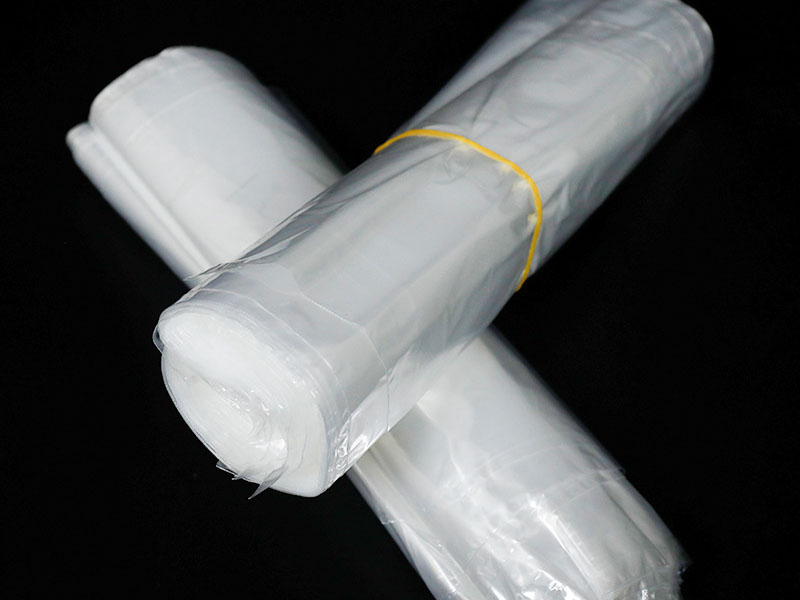
And yes, it’s FDA-compliant. Not “technically compliant if you file a letter,” but actively listed in FDA’s FCN database (Food Contact Notification #1892 covers e-beam cross-linked POF for pharmaceutical secondary packaging), with full extractables profiling against USP and ISO 10993-12. That’s a big deal when your QA team reviews supplier dossiers—and it means no last-minute surprises during health authority inspections. One global vaccine manufacturer told me they chose cross-linked POF not because it was cheaper (it’s modestly pricier than standard POF), but because it eliminated three separate risk assessments: one for leachables, one for irradiation stability, and one for cold-chain integrity. Sometimes the smartest cost savings aren’t in the unit price—they’re in avoided delays, rework, and regulatory friction.
So what’s the bottom line? If you’re evaluating materials for pharmaceutical secondary packaging—especially for products sensitive to moisture, heat, or radiation—cross-linked POF film isn’t just another option. It’s a convergence of proven polymer science, real-world line performance, and regulatory readiness. It answers the unspoken questions before they become audit findings: Will this hold up during gamma sterilization? Does it breathe just enough—or too much? Can my existing shrink tunnel handle it without tweaking? Will regulators accept it without qualification? The answer, increasingly, is yes—across geographies, dosage forms, and regulatory expectations. POF cross-linked film for pharmaceutical packaging isn’t the future. It’s the pragmatic, performance-driven choice showing up on production floors today—quietly, reliably, and with very little fanfare.


Comments (0)